Showing posts with label Galbraith. Show all posts

Wednesday, December 18, 2013

Will We Ever Learn?

  The scene: The wake of a major recession, caused by excesses by wealthy individuals and corporations.  The nation, particularly the middle class and small businesses, has been severely damaged.  The Democratic Party presses for reform and more regulation.  The Republican Party splits between its mainstream conservatives, who support the status quo, and a fringe group demanding a sweeping change in the party's direction.  The time: 2013, after the Great Recession of 2008? 

  Nope—I am writing about the turn of the 20th century, after the devastating Panic of 1893.  Ironically, the Republican Party's fringe were then left-wing progressives calling for legislation that would limit the power of the great trusts and monopolies, and provide more protection for unions and the average citizen.  (Remember: the Republican Party was at that time truly the party of Lincoln.)  Fortunately, the president was Theodore Roosevelt, one of the Republican fringe who—after being relegated to the powerless office of Vice President by the mainstream of the party—had succeeded to the presidency on the assassination of President McKinley.  By virtue of that accident of history, Roosevelt almost single-handedly launched the Progressive Era of the first two decades of the 20th century.

  That era is the subject of an excellent new book by Doris Kearns Goodwin: The Bully Pulpit: Theodore Roosevelt, William Howard Taft, and the Golden Age of Journalism.  As the title suggests, it is a twin biography of Roosevelt and Taft, the 26th and 27th presidents of the United States.  It also contains a series of mini-biographies of the so-called muckraking journalists, notably S. S. McClure, publisher of the influential McClure's magazine, and those who wrote lengthy exposés for it—among them Ida Tarbell, Ray Stannard Baker, Lincoln Steffans and William Allen White.  It is a massive book (over 900 pages, about a third being copious end notes documenting its many quotations) but for all its length a very worthwhile read.

  I need not summarize Bully Pulpit here.  That has been done in a splendid review in the New York Times by Bill Keller, formerly executive editor of the paper.  Suffice it to say that the biographies of Roosevelt and Taft are fine pointillist paintings of the men, their families, their philosophies and their long-term interdependence—gripping even for those who have read about them previously.  The biographies of the muckrakers are much shorter, but explain how each became a stentorian voice for the people and against conglomerations of corporations and corrupt politicians.  The book illuminates how Roosevelt, Taft and the muckrakers interacted to change the course of the nation.

  Of course, Teddy Roosevelt dominates the book, as he did the era.  Scion of a rich and famous family, he was brash, hyperactive, and multi-talented: a prolific writer, a consummate politician, a warrior, a rancher and a big-game hunter.   He made his mark as a politician by being marvelously open to others' insights, especially the muckrakers' investigations of excesses in the country, always probing to get an understanding of the thinking of the masses.  Taft plays a secondary, supportive role—a counterbalance to Roosevelt's sometimes-immoderate forays.  They both used the Congress, the courts and executive power to break up trusts that had monopolized the oil, steel, railroad and financial industries through bribery, corruption and intimidation; and to empower the middle class and labor unions in their opposition to those trusts.

  Goodwin's book cannot help but focus one's attention on the repetitive folly of the business cycle, as new generations forget the lessons of the past.  We have had three such major cycles in the United States in the past 150 years, each starting with a period of increasing laissez faire that led to an extraordinary disparity of wealth, income and power between the moneyed classes and the rest of the population.  Major economic crises ensued, followed by periods of reform:
 
• In the aftermath of the Civil War, the period of laissez faire was accompanied by the ascent of the robber barons in railroads, steel, oil, finance and other industries.  The Panic of 1893 called forth the reformers and regulation of the Progressive Era described above. 
• Subsequent laissez faire excesses during the Roaring Twenties led to the Great Depression of the 1930s.  Franklin Roosevelt's New Deal then added massive new regulation to the economy, reining in the free-wheeling financial and industrial sectors and empowering unions.
• In the 1970s and 1980s, laissez faire came back in favor, with many of the New Deal's regulations being reversed.  Subsequent excesses caused the Great Recession starting in 2008.  There is a still-ongoing period of regulatory reforms, against those who purblindly again want the market to "do its magic" unimpeded, and therefore are busy chipping away at those reforms.

  Will we ever learn?  I doubt it, for such madcap cycles have been occurring with regularity since at least the Dutch tulip mania of the early 17th century.  In this opinion, I am in the good company of John Kenneth Galbraith who in his little gem of a book, A Short History of Financial Euphoria, concludes that "there is probably not a great deal that can be done.  Regulation outlawing financial incredulity or mass euphoria is not a practical possibility." 

  When will the next disaster hit?  No one can tell, not even Nobel Prize-winning economists, for all their expertise.  As Galbraith once famously said, "The only function of economic forecasting is to make astrology look respectable."
Wednesday, July 11, 2012

Computer Science

  At the risk of boring some readers of The Berkeley Write, I've decided to review the remarkable history of computer science, from its barely existing a half century ago to being at the core of almost everything now.  That history is remarkable not merely because computers have become so ubiquitous, but especially because computer science has fundamentally changed the way we solve problems. 

  When I was an electrical engineering undergraduate at MIT in the late 1940s, I was dumbfounded to find that a classmate was studying Boolean algebra, an algebra of logic.  As one who was steeped in the mathematics of the continuum, I asked him why he was interested in an algebra having only two values—0 and 1.  He told me that he wanted to study digital computers. 

  I couldn't understand why he would be wasting his time.  Although I had worked on electro-mechanical analog computers during the summer after my freshman year, I scarcely knew what a digital computer was, and had absolutely no inkling at all of the revolution they would shortly ignite.  In my own exculpation, I should say that there were only a handful of them in existence at the time, and that even Thomas Watson, founder and then-chairman of IBM, had a few years earlier estimated their ultimate world-wide commercial market to be about five.  (To paraphrase John Kenneth Galbraith's remark about economic forecasting: The only function of engineering forecasting is to make astrology look respectable.)

  In 1960, when I joined the faculty at UC Berkeley, digital computers were much more widespread, but the term "computer science" was still an oxymoron: few could perceive any science there at all.  The study of computers at Cal, as elsewhere, was embedded in the department of electrical engineering, where the few courses on computers involved only the design of their electronic circuitry, peripherals and elementary programming.  Later in the decade, a few faculty members started going beyond those engineering issues, into basic research on the limits on digital computation and the theory of programming languages—i.e., computer science.

  Computer science has since come a very long way, now equally sharing with mathematics the role of fundament of all the sciences, and being central to many non-science disciplines as well.  Most particularly, it has largely changed our way of solving problems, from classical analysis to algorithmic procedures.

  In mathematics and the sciences, classical analysis is characterized by theorem proving and by the formulation of problems so that they can be solved by equations.  You had doses of that way of thinking in your high school geometry, algebra and physics courses, if not further.  For example, you encountered the quadratic equation, y = ax2 + bx + c (often arising in the physics of motion), and were asked to find the values of x for which y = 0.   The two solutions of that problem turned out to be x = - (b/2a) ± ((b2 – 4ac)1/2)/2a.  That's pure analysis.

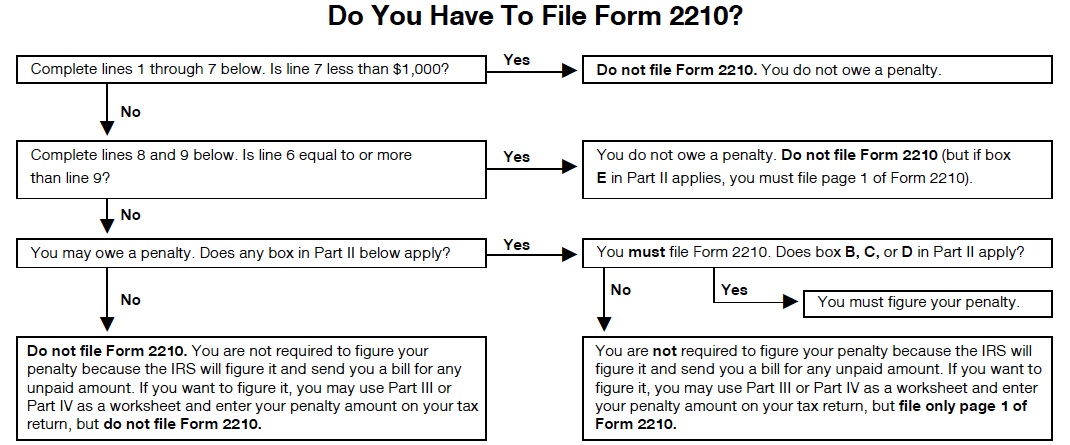
  On the other hand, algorithmic thinking is characterized by a step-by-step, iterative procedure, the modus operandi of computers.  The process for such thinking is often described by a flow chart such as that below, which is taken from one of the forms of the federal income tax return.  You start at the box at the upper left, and step through the chart by answering a series of yes/no questions.  If you get to the box labeled "You must figure your penalty," you then proceed to a set of forms that, rather than giving a formula for calculation of the penalty, guides you through a sequence of "if-then" statements to make the calculation, one step at a time.  That's a pure algorithmic procedure.


  Computer science now occupies a central role in the physical sciences and elsewhere because many problems are too complex for mathematical analysis—for example, the behavior of chaotic systems such as the weather or population dynamics, or of economic systems with a large numbers of variables and participants. To investigate such a problem, a sophisticated algorithmic procedure is designed to model the system at hand, and the procedure is then run on a computer to provide insight into the system's performance.  It's not just a matter of using the computer as a glorified calculator; to get accurate results in reasonable amounts of time and formats, investigators must be as steeped in the fundamentals of computer science as their predecessors were in mathematics.

  Even though computer science didn't start flourishing until the 1960s, it had its ur-moment in 1935 in England in the work of Alan Turing.  He posited a machine that manipulates symbols in a step-by-step fashion.  The device, now called a Turing machine, is quintessentially algorithmic.  Turing never built one.  His genius consisted in specifying an iterative procedure that even now models any computer program and therefore any computer.

  Turing, a superbly talented mathematician, also used the concept of his machine to address a question his contemporary Kurt Gödel had tackled: the completeness of mathematics. Gödel's Incompleteness Theorem showed that some true mathematical statements can't be mathematically proved to be true.  Turing approached the question differently, from the viewpoint of the computability of algorithms.  In a result very much related to Gödel's theorem, he showed that not all problems are solvable computationally in a finite amount of time.

  The question of computability is now front and center in computer science.  Even if a problem is theoretically computable in a finite amount of time, the time needed may be unreasonably large, given the exabyte (quintillion byte) data sets that are becoming common in such scientific and commercial operations as the Large Hadron Collider, the Sloan Digital Sky Survey, the World Data Centre for Climate, Amazon, YouTube, Google, etc.  (The first of these generates a quadrillion bytes of data—more than the information in all the world's libraries—every second!)  This "big data" challenge goes to the heart of computer science: how to effectively organize huge data sets, and how to formulate algorithms that handle them both efficiently in computation time and accurately as the size of the data set increases. 

  An indication of the current importance of big data is the establishment this year of a major research institute at UC Berkeley with a private $60-million grant from the Simons Foundation.  The institute will bring together researchers from around the world to study efficient algorithmic approaches to such important big-data subjects as evolution, the immune system, maintaining privacy while doing data analysis, and climate modeling. You will surely hear much more about big-data research in the next decade.

  So, to repeat: in my own professional lifetime, computer science has come from barely existing at all to being "at the core of almost everything," even of disciplines that were not previously thought of as particularly quantitative.  I find it a stunning story.